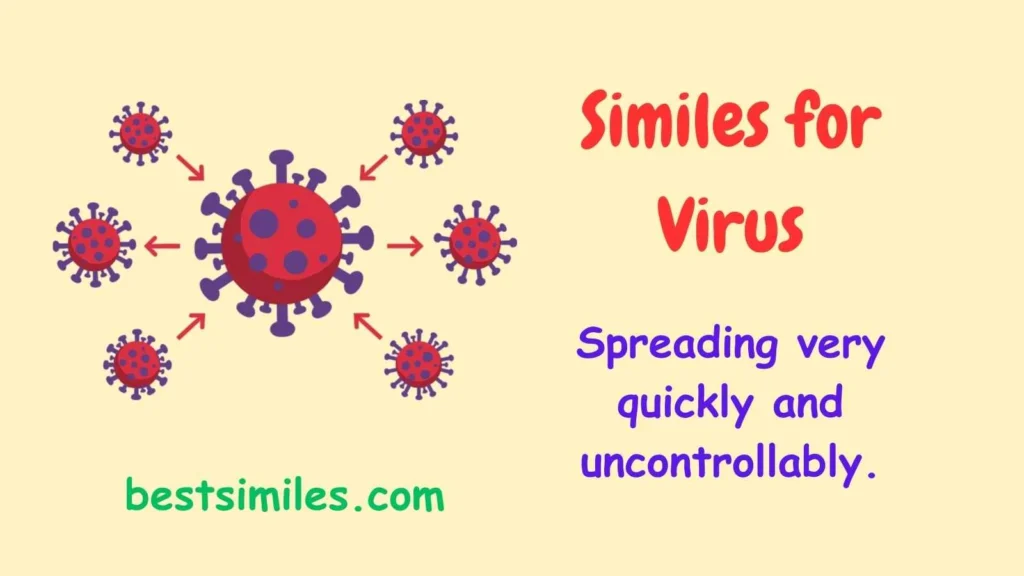
Similes for Virus reveal powerful, imaginative ways to describe something that spreads silently yet impacts deeply.
Whether you’re a student, writer, teacher, or content creator, understanding creative comparisons can strengthen your descriptive writing skills and add emotional depth to your language.
A virus can move like wildfire through dry grass, hide like a shadow in the night, or multiply like rumors in a crowded room.
These vivid comparisons help explain complex ideas in a simple, memorable way. In literature, classrooms, and even everyday conversation, using figurative language, creative similes, and strong imagery makes communication more engaging and impactful.
Quick Definition of a Simile
A simile is a figure of speech that compares two different things using “like” or “as.”
It helps readers imagine something clearly by linking it to a familiar image or idea.
For example: “The virus spread like wildfire.”
Like wildfire racing through a dry forest
Meaning: Spreading very quickly and uncontrollably.
Definition: Compares a virus to a fast-moving fire.
Examples:
- The virus spread like wildfire through the crowded city.
- Rumors about the virus moved like wildfire online.
Like a thief in the night
Meaning: Moving secretly and unnoticed.
Definition: Compares a virus to a silent thief.
Examples:
- The virus entered like a thief in the night.
- It attacked his body like a thief in the night.
Like a storm sweeping across the coast
Meaning: Powerful and overwhelming.
Definition: Compares a virus to a destructive storm.
Examples:
- The virus hit the town like a storm sweeping across the coast.
- Fear spread like a storm after the outbreak.
Like a shadow that follows you
Meaning: Hard to escape.
Definition: Compares a virus to a constant shadow.
Examples:
- The infection clung like a shadow that follows you.
- Anxiety lingered like a shadow during the pandemic.
Like dominoes falling one by one
Meaning: Causing a chain reaction.
Definition: Compares the spread to falling dominoes.
Examples:
- People got sick like dominoes falling one by one.
- Businesses closed like dominoes during the crisis.
Like ink spreading through water
Meaning: Gradually spreading everywhere.
Definition: Compares the virus to ink dissolving in water.
Examples:
- The virus spread like ink through water.
- Panic moved like ink across the community.
Like a spark in dry grass
Meaning: Starting something big quickly.
Definition: Compares the virus to a small spark causing fire.
Examples:
- One traveler carried the virus like a spark in dry grass.
- The outbreak grew like a spark turning into flames.
Like a ripple across a pond
Meaning: Spreading outward in waves.
Definition: Compares the virus to water ripples.
Examples:
- News of the virus moved like a ripple across a pond.
- The infection spread like ripples in water.
Like ants invading a picnic
Meaning: Coming in large numbers suddenly.
Definition: Compares the virus to invading ants.
Examples:
- The virus spread like ants invading a picnic.
- Worries gathered like ants at a picnic.
Like a ticking time bomb
Meaning: Dangerous and waiting to explode.
Definition: Compares the virus to a hidden bomb.
Examples:
- The crowded event felt like a ticking time bomb.
- The virus acted like a ticking time bomb in the city.
Like a wolf among sheep
Meaning: Dangerous among the vulnerable.
Definition: Compares the virus to a predator.
Examples:
- The virus moved like a wolf among sheep.
- It attacked the weak like a wolf in a flock.
Like smoke slipping through cracks
Meaning: Hard to contain.
Definition: Compares the virus to escaping smoke.
Examples:
- The virus spread like smoke through cracks.
- It slipped between borders like smoke.
Like lightning striking without warning
Meaning: Sudden and unexpected.
Definition: Compares the virus to lightning.
Examples:
- The illness hit like lightning without warning.
- Cases rose like lightning strikes.
Like weeds in an untended garden
Meaning: Growing quickly without control.
Definition: Compares the virus to weeds.
Examples:
- Infections grew like weeds in an untended garden.
- Rumors spread like weeds after the news.
Like a wave crashing onto shore
Meaning: Powerful and forceful.
Definition: Compares the virus to ocean waves.
Examples:
- The second wave hit like a wave crashing ashore.
- Fear rose like a powerful tide.
Like frost creeping over a window
Meaning: Slowly covering everything.
Definition: Compares the virus to frost.
Examples:
- The virus spread like frost on glass.
- Silence covered the town like frost.
Like a rumor in a small town
Meaning: Spreading fast from person to person.
Definition: Compares the virus to gossip.
Examples:
- It moved like a rumor in a small town.
- News spread like gossip at sunrise.
Like a snake in tall grass
Meaning: Hidden and dangerous.
Definition: Compares the virus to a snake.
Examples:
- The virus hid like a snake in tall grass.
- Danger waited like a snake unseen.
Like a crack in a dam
Meaning: Small start, big disaster.
Definition: Compares the virus to a dam crack.
Examples:
- One case became many like a crack in a dam.
- The outbreak expanded like water through cracks.
Like dust carried by the wind
Meaning: Easily spreading everywhere.
Definition: Compares the virus to blowing dust.
Examples:
- It traveled like dust in the wind.
- The virus moved across borders like dust.
Like a parasite feeding silently
Meaning: Slowly harming without notice.
Definition: Compares the virus to a parasite.
Examples:
- The infection acted like a parasite feeding silently.
- It drained energy like a hidden parasite.
Like a chain reaction in a lab
Meaning: Triggering continuous events.
Definition: Compares the virus to scientific reactions.
Examples:
- Cases rose like a chain reaction in a lab.
- Fear multiplied like chemicals reacting.
Like a dark cloud over the city
Meaning: Bringing gloom and worry.
Definition: Compares the virus to a cloud.
Examples:
- The virus hung like a dark cloud.
- Sadness spread like storm clouds.
Like oil spilling into water
Meaning: Contaminating everything.
Definition: Compares the virus to oil spill.
Examples:
- The virus spread like oil in water.
- Panic leaked like oil into calm lives.
Like a computer bug crashing a system
Meaning: Disrupting normal life.
Definition: Compares the virus to a tech bug.
Examples:
- The virus hit society like a bug crashing a system.
- Schools closed like systems shutting down.
Like a silent earthquake
Meaning: Causing hidden damage.
Definition: Compares the virus to an unseen quake.
Examples:
- The illness felt like a silent earthquake.
- The impact shook the economy like tremors.
Like poison in the bloodstream
Meaning: Dangerous inside the body.
Definition: Compares the virus to poison.
Examples:
- The virus moved like poison in the bloodstream.
- Fear spread like toxins in veins.
Like a match dropped in gasoline
Meaning: Instantly explosive spread.
Definition: Compares the virus to ignition.
Examples:
- The gathering was like a match in gasoline.
- The outbreak exploded like sudden flames.
Like a swarm of bees
Meaning: Attacking in numbers.
Definition: Compares the virus to bees.
Examples:
- The virus attacked like a swarm of bees.
- Questions buzzed like angry bees.
Like cracks spreading through ice
Meaning: Gradually widening.
Definition: Compares the virus to breaking ice.
Examples:
- The infection spread like cracks through ice.
- The crisis grew like lines in frozen water.
Turn Simple Words into Powerful Imagery with These Similes
You can use these similes for virus in many creative ways:
- Poems: Add emotional depth and vivid imagery.
- Stories: Describe outbreaks or tension dramatically.
- Songs: Express fear, struggle, or resilience.
- Essays: Explain impact in a clear and memorable way.
Quick Writing Tips
| Use in | How It Helps |
|---|---|
| Poetry | Creates strong visuals |
| Fiction | Builds tension |
| Speeches | Makes ideas relatable |
| Articles | Simplifies complex topics |
Try combining similes with emotions to make your writing more powerful.
Frequently Asked Questions About Similes for Virus
What is a simile in simple words?
A simile is a comparison using like or as to describe something clearly.
Why use similes for virus?
They help explain how a virus spreads or feels in a creative way.
Can similes be used in essays?
Yes, especially in descriptive or creative essays.
What is the difference between simile and metaphor?
A simile uses like or as, while a metaphor directly says something is something else.
Are similes good for storytelling?
Absolutely. They make scenes more vivid and emotional.
Conclusion
Similes make complex ideas simple and powerful. These 30 similes for virus help you describe speed, danger, fear, and impact in creative ways.
Whether you are writing poetry, fiction, or essays, these comparisons add color and clarity. Start using them today to make your writing more vivid and unforgettable.
If you found these similes for virus helpful, bookmark this page and share it with fellow writers.
Creative comparisons can transform ordinary sentences into memorable lines that readers truly feel. Keep practicing, keep writing, and let your imagination spread — but in a good way!

Michel is a passionate language enthusiast and the creative mind behind bestsimiles.com, dedicated to exploring the beauty of words and expressions. With a deep love for literary arts, he brings readers unique insights and engaging content on similes and figurative language. His work inspires writers and language lovers to think creatively and express themselves more vividly.