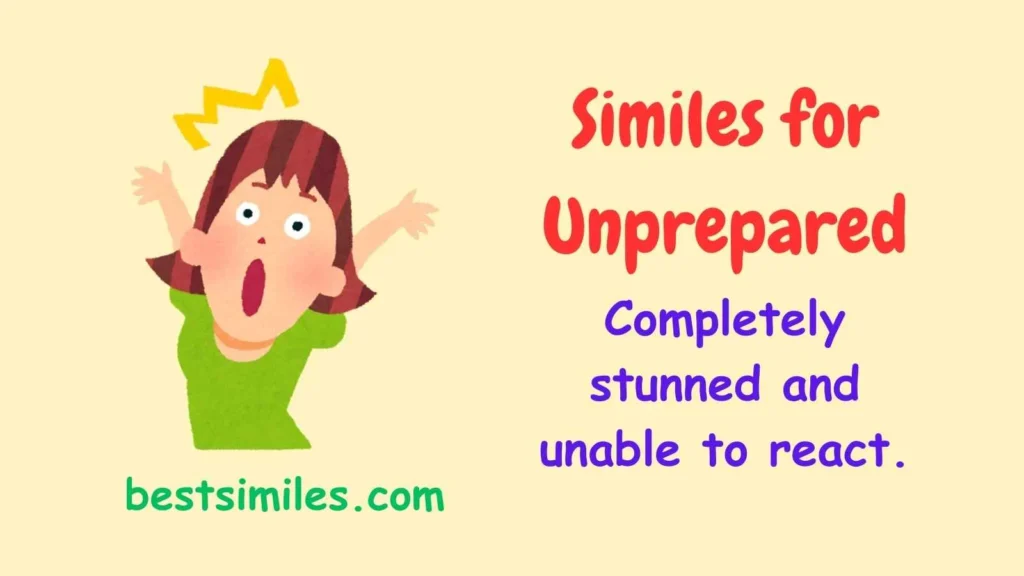
Similes for unprepared perfectly capture moments when someone is caught off guard, not ready, or completely taken by surprise.
Language becomes more powerful when it paints a clear picture, and similes help readers instantly feel the situation rather than just understand it. Whether you are writing creative stories, school essays, poetry, or descriptive paragraphs, the right comparison can turn a simple sentence into something vivid and memorable.
Writers, students, and language lovers often search for fresh ways to describe lack of preparation, sudden situations, or unexpected challenges without sounding repetitive. That is where well-crafted similes add depth, emotion, and clarity. Using expressive comparisons improves readability, strengthens imagery, and keeps readers engaged from the very first line.
Quick Definition of a Simile
A simile is a figure of speech that compares two different things using the words “like” or “as.” It helps make ideas more clear, relatable, and imaginative.
1. Like a deer in headlights
Meaning: Completely stunned and unable to react.
Definition: Someone caught off guard and frozen by surprise.
Examples:
- He froze like a deer in headlights when the principal called his name.
- She looked like a deer in headlights when asked to speak in front of the crowd.
2. Like a fish out of water
Meaning: Feeling uncomfortable or awkward in an unfamiliar situation.
Definition: A person who does not fit in a particular setting.
Examples:
- I felt like a fish out of water at the formal dinner.
- He was like a fish out of water in the city after moving from the village.
3. Like a cat on a hot tin roof
Meaning: Extremely nervous or restless.
Definition: Someone who is anxious and cannot stay still.
Examples:
- She paced like a cat on a hot tin roof before her interview.
- The students were like cats on a hot tin roof waiting for the exam results.
4. Like a rabbit caught in a trap
Meaning: Trapped and panicked with no way out.
Definition: Feeling helpless or caught by surprise.
Examples:
- He was like a rabbit caught in a trap when the question was asked.
- She felt like a rabbit caught in a trap during the sudden fire drill.
5. Like a balloon without air
Meaning: Deflated or unready for challenges.
Definition: Lacking energy or preparation.
Examples:
- After forgetting her notes, she felt like a balloon without air.
- He entered the test like a balloon without air and couldn’t answer the questions.
6. Like a bird with clipped wings
Meaning: Unable to act freely or succeed.
Definition: Feeling restricted or unprepared to take action.
Examples:
- The new employee was like a bird with clipped wings in the office.
- Without proper training, the athlete felt like a bird with clipped wings.
7. Like a soldier without armor
Meaning: Vulnerable and exposed.
Definition: Facing a challenge unprepared and defenseless.
Examples:
- She faced the debate like a soldier without armor.
- He entered the negotiation like a soldier without armor and lost immediately.
8. Like a book with blank pages
Meaning: Totally unprepared or empty of ideas.
Definition: Having nothing ready to present or show.
Examples:
- I was like a book with blank pages when the teacher called me.
- He approached the client like a book with blank pages and had nothing to show.
9. Like a candle in the wind
Meaning: Weak and defenseless in a challenging situation.
Definition: Easily extinguished or overcome due to lack of preparation.
Examples:
- The small team was like a candle in the wind against the big corporation.
- Without backup, she felt like a candle in the wind during the debate.
10. Like a lost puppy
Meaning: Confused, scared, and unsure what to do.
Definition: Feeling vulnerable and unprepared in a situation.
Examples:
- He wandered like a lost puppy in the busy market.
- During the first day at school, she felt like a lost puppy.
11. Like a soldier without a sword
Meaning: Ineffective and unready to face challenges.
Definition: Lacking the necessary tools or skills.
Examples:
- Entering the competition without practice, he was like a soldier without a sword.
- She went to the exam like a soldier without a sword and struggled.
12. Like a car without fuel
Meaning: Unable to function or move forward.
Definition: Lacking the resources to proceed effectively.
Examples:
- The team felt like a car without fuel during the crisis.
- Without the proper strategy, the project ran like a car without fuel.
13. Like a kite without string
Meaning: Directionless and unprepared.
Definition: Moving without control or plan.
Examples:
- She felt like a kite without string when her plans fell apart.
- His career path was like a kite without string until he got guidance.
14. Like a clown at a serious meeting
Meaning: Out of place and unready.
Definition: Inappropriate or unprepared for the situation.
Examples:
- He felt like a clown at a serious meeting when asked to present.
- She entered the office like a clown at a serious meeting without preparation.
15. Like a storm without warning
Meaning: Caught completely by surprise.
Definition: Facing something unexpected and unprepared.
Examples:
- The announcement hit us like a storm without warning.
- He was like a storm without warning when the boss asked for the report.
16. Like a student without notes
Meaning: Totally unprepared for learning or tests.
Definition: Missing essential preparation.
Examples:
- I walked into the exam like a student without notes.
- She answered hesitantly like a student without notes.
17. Like a chef without ingredients
Meaning: Unable to produce results due to lack of preparation.
Definition: Missing key tools or elements to succeed.
Examples:
- The project was like a chef without ingredients and failed.
- Writing the essay without research was like a chef without ingredients.
18. Like a pilot without a map
Meaning: Lost and directionless.
Definition: Unprepared for navigating challenges.
Examples:
- The new manager felt like a pilot without a map.
- He started the journey like a pilot without a map and got lost.
19. Like a knight without armor
Meaning: Vulnerable and unprotected.
Definition: Facing danger unprepared.
Examples:
- The lawyer went into court like a knight without armor.
- She faced criticism like a knight without armor.
20. Like a puzzle missing pieces
Meaning: Incomplete and ineffective.
Definition: Lacking essential parts to succeed.
Examples:
- His plan was like a puzzle missing pieces.
- The presentation was like a puzzle missing pieces, confusing everyone.
21. Like a candle without a match
Meaning: Cannot shine or begin without preparation.
Definition: Unable to act due to missing the starting point.
Examples:
- The speaker was like a candle without a match before the ceremony.
- Writing without ideas is like a candle without a match.
22. Like a runner without shoes
Meaning: Unprepared and disadvantaged.
Definition: Facing challenges without proper tools.
Examples:
- Entering the race like a runner without shoes was tough.
- He started coding like a runner without shoes and struggled.
23. Like a bird without a nest
Meaning: Homeless, lost, and unprepared.
Definition: Lacking stability or preparation.
Examples:
- Moving to a new city felt like a bird without a nest.
- The orphaned chick was like a bird without a nest.
24. Like a player without a game plan
Meaning: Directionless and unready.
Definition: Missing strategy or preparation.
Examples:
- The team entered like a player without a game plan.
- Without guidance, the student was like a player without a game plan.
25. Like a balloon in a storm
Meaning: Easily shaken and unprepared.
Definition: Overwhelmed by unexpected situations.
Examples:
- He felt like a balloon in a storm during the sudden criticism.
- The project team was like a balloon in a storm when deadlines changed.
26. Like a ship without a captain
Meaning: Directionless and unprepared to lead.
Definition: Lacking guidance in a crucial situation.
Examples:
- The office felt like a ship without a captain after the manager left.
- The class was like a ship without a captain without the teacher.
27. Like a student caught cheating
Meaning: Caught off guard and embarrassed.
Definition: Surprised and unprepared for consequences.
Examples:
- He looked like a student caught cheating when questioned.
- The politician reacted like a student caught cheating during the debate.
28. Like a leaf in the wind
Meaning: Helpless and unprepared.
Definition: Easily moved or influenced by circumstances.
Examples:
- She felt like a leaf in the wind during the unexpected changes.
- The intern was like a leaf in the wind without guidance.
29. Like a boxer with no gloves
Meaning: Vulnerable and unready for a fight.
Definition: Facing challenges without tools or protection.
Examples:
- He entered the competition like a boxer with no gloves.
- Facing criticism without preparation felt like a boxer with no gloves.
30. Like a painter with no brush
Meaning: Unable to create or act.
Definition: Lacking essential tools to perform a task.
Examples:
- The writer felt like a painter with no brush.
- He approached the design like a painter with no brush and got stuck.
How to Use These Similes in Creative Writing
- Poems: Add vivid imagery by comparing emotions or situations using these similes.
- Stories: Show characters’ feelings of being unprepared or anxious.
- Songs: Make lyrics relatable by describing vulnerability with these comparisons.
- Essays: Enhance descriptive writing by illustrating situations clearly.
- Tips: Mix similes with metaphors for stronger emotional impact, and vary sentence length to maintain flow.
FAQs
What is a simile?
A simile is a comparison using “like” or “as” to describe something in a vivid way.
Why use similes for unprepared?
They make writing relatable, engaging, and visually descriptive.
Can similes be used in professional writing?
Yes, in moderation, similes can make essays, reports, and articles more engaging.
How many similes should I use in writing?
Use 2–5 per paragraph to avoid overloading the reader.
Are similes the same as metaphors?
No, metaphors imply comparison directly, while similes use “like” or “as.”
Conclusion:
Using similes for unprepared makes your writing vivid, relatable, and engaging.
Whether in stories, poems, or essays, these 30 similes help convey emotions and situations clearly.
Start applying these comparisons today and watch your writing become more expressive and memorable!

Jaison is the passionate wordsmith behind bestsimiles.com, dedicated to bringing creative and relatable similes to readers worldwide. With a deep love for language and expression, he crafts content that is both engaging and memorable. His goal is to inspire imagination and make every phrase resonate.