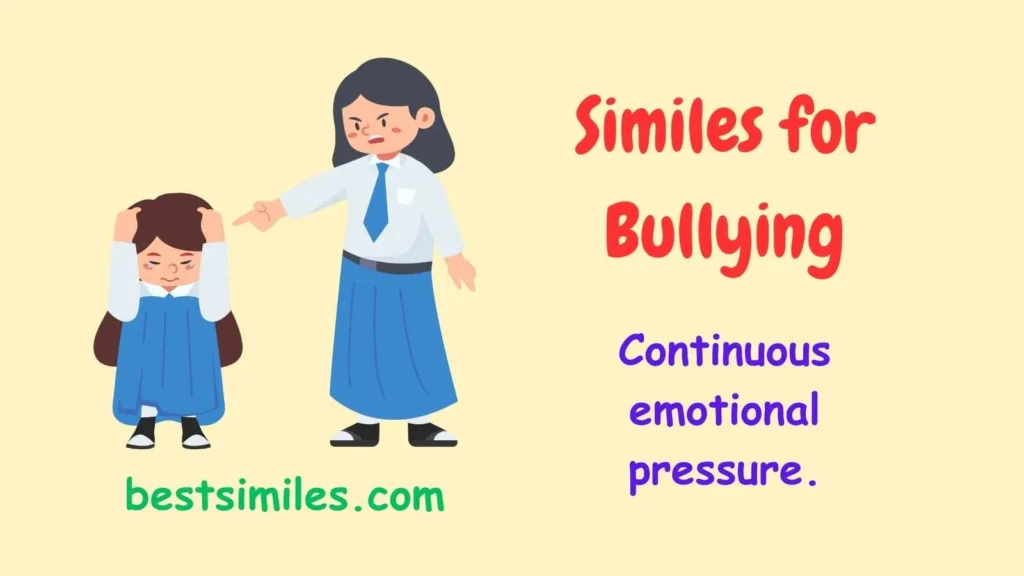
similes for bullying reveal how hurtful actions can be compared to everyday experiences, helping readers understand emotional impact with clarity.
In literature, classrooms, and social communication, figurative language turns complex feelings into vivid images. Comparing verbal abuse to “a storm that won’t stop” or social aggression to “a shadow that follows” builds empathy and awareness.
These expressive comparisons strengthen writing skills, support anti-bullying education, and improve emotional literacy for students and adults alike. Whether you’re a teacher, writer, or learner, meaningful similes make discussions about respect, kindness, and behavior easier to grasp.
Quick Definition of a Simile
A simile is a figure of speech that compares two different things using like or as.
It helps make descriptions more visual, emotional, and easy to understand in writing or speech.
Creative Table Overview of Similes
| Simile Theme | What It Suggests |
|---|---|
| Pain & Hurt | Emotional or physical suffering |
| Power & Fear | Control, intimidation |
| Persistence | Ongoing negative behavior |
| Emotional Impact | Anxiety, sadness, stress |
Full List of Similes for Bullying
Like a storm that never stops
Meaning: Continuous emotional pressure.
Definition: Compares bullying to an endless storm.
Examples:
- His teasing felt like a storm that never stops.
- The rumors hit her like a storm that never stops.
As sharp as a knife
Meaning: Hurtful words.
Definition: Shows verbal bullying cutting deeply.
Examples:
- Her insults were as sharp as a knife.
- The comment struck him as sharp as a knife.
Like a shadow that follows everywhere
Meaning: Bullying that feels unavoidable.
Definition: Compares bullying to a constant shadow.
Examples:
- Fear followed him like a shadow everywhere.
- The taunts stayed like a shadow around her.
As heavy as a mountain
Meaning: Emotional burden.
Definition: Suggests overwhelming pressure.
Examples:
- The stress felt as heavy as a mountain.
- His silence carried weight as heavy as a mountain.
Like a wolf chasing its prey
Meaning: Aggressive pursuit.
Definition: Compares bully behavior to hunting.
Examples:
- They followed him like wolves chasing prey.
- The pressure felt like a wolf hunt.
As cold as ice
Meaning: Lack of empathy.
Definition: Shows emotional coldness.
Examples:
- His response was as cold as ice.
- The laughter sounded cold as ice.
Like poison spreading slowly
Meaning: Gradual emotional harm.
Definition: Suggests long-term impact.
Examples:
- Gossip spread like poison slowly.
- Doubt grew like poison inside her.
As loud as thunder
Meaning: Intimidating presence.
Definition: Shows overpowering behavior.
Examples:
- His shouting was loud as thunder.
- The threats echoed loud as thunder.
Like sandpaper on skin
Meaning: Constant irritation.
Definition: Describes repeated discomfort.
Examples:
- The jokes felt like sandpaper on skin.
- Every remark scratched like sandpaper.
As dark as a moonless night
Meaning: Emotional sadness.
Definition: Shows deep emotional gloom.
Examples:
- Her mood grew dark as a moonless night.
- Fear lingered dark as night.
Like a broken record
Meaning: Repeated bullying.
Definition: Suggests constant repetition.
Examples:
- The teasing repeated like a broken record.
- His insults looped endlessly.
As fragile as glass
Meaning: Emotional vulnerability.
Definition: Shows sensitivity to hurt.
Examples:
- She felt fragile as glass.
- Confidence shattered like glass.
Like chains holding someone down
Meaning: Restricting freedom.
Definition: Compares bullying to restraint.
Examples:
- Fear held him like chains.
- The pressure felt like chains.
As piercing as a siren
Meaning: Disturbing comments.
Definition: Shows strong emotional effect.
Examples:
- The insults pierced like sirens.
- Mockery sounded piercing.
Like a constant drip of water
Meaning: Gradual mental impact.
Definition: Small but persistent harm.
Examples:
- Comments dripped like water torture.
- Stress built slowly.
As suffocating as thick smoke
Meaning: Feeling trapped.
Definition: Emotional overwhelm.
Examples:
- The tension suffocated like smoke.
- Anxiety rose thick as smoke.
Like a heavy rain cloud
Meaning: Looming negativity.
Definition: Suggests pending distress.
Examples:
- Fear hung like a rain cloud.
- His mood shadowed like clouds.
As rough as gravel
Meaning: Harsh treatment.
Definition: Shows abrasive behavior.
Examples:
- His tone was rough as gravel.
- The teasing felt rough.
Like a thorn in the side
Meaning: Persistent annoyance.
Definition: Constant irritation.
Examples:
- The bully was like a thorn.
- Stress stayed constant.
As draining as a long battle
Meaning: Emotional exhaustion.
Definition: Suggests ongoing struggle.
Examples:
- School felt draining like battle.
- She grew tired.
Like a spotlight exposing flaws
Meaning: Public embarrassment.
Definition: Shows unwanted attention.
Examples:
- The joke exposed him like spotlight.
- Attention felt harsh.
As biting as winter wind
Meaning: Hurtful words.
Definition: Emotional sting.
Examples:
- The remark bit like winter wind.
- Criticism felt icy.
Like a weight on the chest
Meaning: Anxiety pressure.
Definition: Emotional heaviness.
Examples:
- Stress sat heavy on chest.
- Fear pressed down.
As relentless as waves
Meaning: Continuous bullying.
Definition: Shows persistence.
Examples:
- Teasing came relentless as waves.
- Pressure never stopped.
Like cracks spreading in glass
Meaning: Growing emotional damage.
Definition: Gradual breakdown.
Examples:
- Confidence cracked slowly.
- Trust weakened.
As isolating as a deserted island
Meaning: Loneliness.
Definition: Social exclusion.
Examples:
- He felt isolated.
- Silence surrounded her.
Like a buzzing mosquito
Meaning: Annoying persistence.
Definition: Constant irritation.
Examples:
- The teasing buzzed nonstop.
- Comments annoyed him.
As cruel as a drought
Meaning: Emotional deprivation.
Definition: Lack of kindness.
Examples:
- Kindness dried up.
- Support felt absent.
Like fire spreading quickly
Meaning: Rapid rumor spread.
Definition: Escalating bullying.
Examples:
- Gossip spread like fire.
- News traveled fast.
As exhausting as running uphill
Meaning: Emotional struggle.
Definition: Continuous effort to cope.
Examples:
- School felt exhausting.
- Coping took energy.
Turn These Similes into Powerful Writing Magic
Using similes about bullying can make your writing more emotional, vivid, and meaningful. Here’s how you can apply them creatively:
- Poetry: Express emotions sensitively without sounding harsh.
- Stories: Show characters’ struggles realistically.
- Songs: Add emotional depth and relatability.
- Essays: Explain the psychological impact clearly.
- Speeches: Raise awareness effectively.
Tip: Always use similes respectfully when discussing serious topics like bullying.
FAQs About Similes for Bullying
What is a simile about bullying?
A simile about bullying compares bullying behavior or its impact to something familiar using “like” or “as” to make the idea clearer.
Why use similes when discussing bullying?
They help explain emotions, pain, or situations more vividly so readers understand the seriousness better.
Can similes help in awareness writing?
Yes, they make descriptions relatable and emotional, which helps awareness campaigns connect with people.
Are similes suitable for academic writing?
Yes, when used carefully, they clarify complex emotional experiences effectively.
How many similes should I use in writing?
Use only a few strong ones so your message stays clear and impactful.
Conclusion
Similes make difficult topics easier to understand by turning emotions and experiences into relatable images.
These bullying similes can help in writing, awareness, and emotional expression. Use them thoughtfully to communicate feelings clearly while encouraging empathy, understanding, and positive change.
If these similes inspired you, try using them in your own writing today. Clear expression builds awareness — and awareness helps stop bullying.
Save this list, share it, and keep exploring creative language that makes your voice stronger and more meaningful.

Michel is a passionate language enthusiast and the creative mind behind bestsimiles.com, dedicated to exploring the beauty of words and expressions. With a deep love for literary arts, he brings readers unique insights and engaging content on similes and figurative language. His work inspires writers and language lovers to think creatively and express themselves more vividly.