Similes And Metaphors For Frustration are powerful tools that help express emotions when words alone fall short. Frustration is a universal feeling—like hitting a wall repeatedly or trying to catch smoke with bare hands—and using vivid comparisons can turn these intense emotions into relatable imagery.
Writers, speakers, and even everyday communicators use creative similes and metaphors to capture the essence of irritation, impatience, and tension in ways that resonate deeply with their audience.
From the subtle grind of everyday annoyances to overwhelming moments of exasperation, these literary devices transform abstract feelings into concrete images, making frustration more understandable and even cathartic.
Quick Definition of a Simile
A simile compares two different things using like or as to make descriptions stronger. It helps readers visualize emotions or situations more clearly.
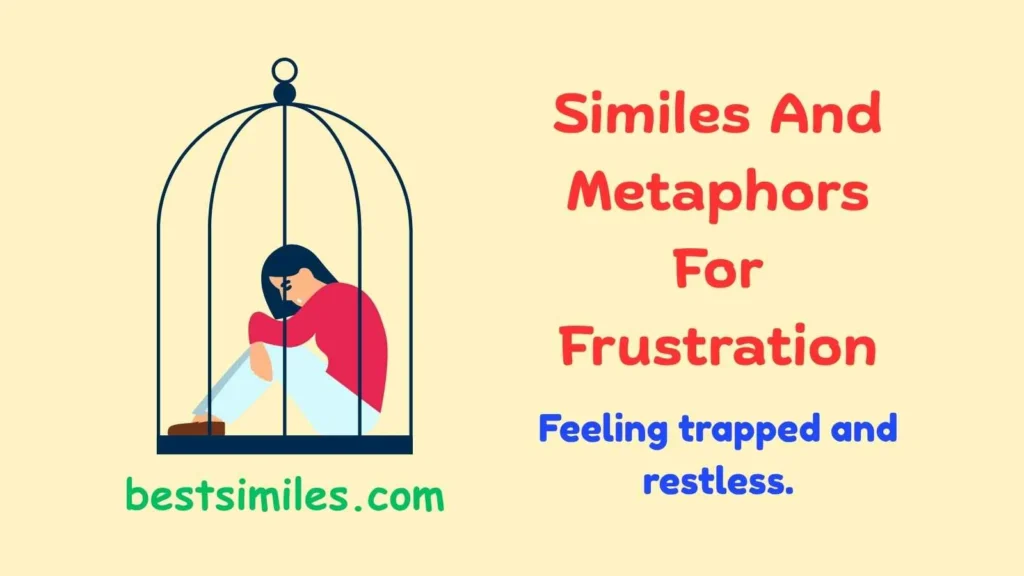
1. Frustrated like a bird in a cage
- Meaning: Feeling trapped and restless.
- Definition: Comparing being stuck or unable to act to a caged bird.
- Examples:
- She paced the room, frustrated like a bird in a cage.
- His thoughts spun in circles, frustrated like a bird in a cage.
2. Boiling like a kettle
- Meaning: Anger and irritation building up quickly.
- Definition: Comparing frustration to water reaching a boiling point.
- Examples:
- His face turned red, boiling like a kettle over heat.
- I was boiling like a kettle after hearing the unfair news.
3. Snapping like a brittle twig
- Meaning: Losing patience suddenly.
- Definition: Comparing breaking under pressure to a dry twig snapping.
- Examples:
- She snapped like a brittle twig after hearing the lies.
- He felt himself snapping like a brittle twig during the argument.
4. Like a storm inside
- Meaning: Inner turmoil and chaos.
- Definition: Comparing emotional frustration to a raging storm.
- Examples:
- There was a storm inside him he couldn’t calm.
- Her frustration brewed like a storm inside.
5. Trapped like a mouse in a maze
- Meaning: Confused and unable to find a solution.
- Definition: Comparing frustration to a mouse navigating a confusing maze.
- Examples:
- I felt trapped like a mouse in a maze with no way out.
- He was trapped like a mouse in a maze, searching for answers.
6. Steaming like a tea pot
- Meaning: Showing visible signs of irritation.
- Definition: Comparing someone frustrated to steam rising from a hot tea pot.
- Examples:
- She was steaming like a tea pot after the meeting.
- He left the room, steaming like a tea pot.
7. Like a volcano ready to erupt
- Meaning: Frustration reaching a breaking point.
- Definition: Comparing rising anger to a volcano before eruption.
- Examples:
- His anger was like a volcano ready to erupt.
- She felt like a volcano ready to erupt after repeated failures.
8. Fuming like a chimney
- Meaning: Strong irritation that is noticeable.
- Definition: Comparing visible anger to smoke coming out of a chimney.
- Examples:
- He was fuming like a chimney after the argument.
- She walked away, fuming like a chimney.
9. Like running in circles
- Meaning: Efforts that go nowhere, causing frustration.
- Definition: Comparing wasted effort to moving in circles without progress.
- Examples:
- Trying to fix the bug felt like running in circles.
- He was frustrated, like running in circles with no solution.
10. Like a car stuck in mud
- Meaning: Feeling stuck and unable to move forward.
- Definition: Comparing frustration to a vehicle trapped in mud.
- Examples:
- Her career felt like a car stuck in mud.
- He was like a car stuck in mud, unable to progress.
11. Like a pressure cooker
- Meaning: Pressure building until it explodes.
- Definition: Comparing frustration to a cooker under high heat and pressure.
- Examples:
- My patience was like a pressure cooker ready to blow.
- She sat silently, like a pressure cooker on the verge of bursting.
12. Like a tangled ball of yarn
- Meaning: Confusion and irritation combined.
- Definition: Comparing frustration to tangled yarn that is hard to straighten.
- Examples:
- His thoughts were like a tangled ball of yarn.
- The plan got messy, like a tangled ball of yarn.
13. Like a storm in a teacup
- Meaning: Small problem causing big frustration.
- Definition: Comparing minor issues to exaggerated chaos.
- Examples:
- Their fight was like a storm in a teacup.
- I realized I was making a storm in a teacup over nothing.
14. Grinding like gears
- Meaning: Persistent irritation or friction.
- Definition: Comparing frustration to misaligned mechanical gears.
- Examples:
- Their conversation kept grinding like gears.
- I felt like my mind was grinding like gears.
15. Like a balloon about to pop
- Meaning: Tension and irritation building to a breaking point.
- Definition: Comparing frustration to a balloon swelling before bursting.
- Examples:
- She was like a balloon about to pop with stress.
- His anger was like a balloon about to pop.
16. Like a puzzle missing pieces
- Meaning: Incomplete understanding causing frustration.
- Definition: Comparing confusion to a puzzle that cannot be solved.
- Examples:
- The problem felt like a puzzle missing pieces.
- He was like a puzzle missing pieces, unable to find a solution.
17. Like trying to hold water in hands
- Meaning: Effort that is futile and frustrating.
- Definition: Comparing impossible tasks to holding water in your hands.
- Examples:
- Fixing that system felt like trying to hold water in hands.
- Her attempts were like trying to hold water in hands.
18. Like a dog chasing its tail
- Meaning: Doing something repetitive with no progress.
- Definition: Comparing wasted effort to a dog endlessly chasing its tail.
- Examples:
- We were like dogs chasing our tails in that project.
- His frustration grew like a dog chasing its tail.
19. Like a pot left on fire
- Meaning: Emotions getting hotter over time.
- Definition: Comparing rising frustration to a pot boiling over.
- Examples:
- He simmered like a pot left on fire.
- Her anger was like a pot left on fire too long.
20. Like sand slipping through fingers
- Meaning: Losing control over a situation.
- Definition: Comparing helplessness to sand slipping away.
- Examples:
- Success seemed like sand slipping through fingers.
- I felt like sand slipping through fingers with every mistake.
21. Like a clock with broken hands
- Meaning: Feeling stuck and unable to move forward.
- Definition: Comparing lack of progress to a broken clock.
- Examples:
- My project was like a clock with broken hands.
- I felt like a clock with broken hands, frozen in time.
22. Like being lost in a fog
- Meaning: Confusion and inability to see a solution.
- Definition: Comparing frustration to being unable to find direction in fog.
- Examples:
- His mind was like being lost in a fog.
- I wandered through the problem, like being lost in a fog.
23. Like a rope pulled in all directions
- Meaning: Feeling stretched too thin and frustrated.
- Definition: Comparing pressure to a rope pulled apart.
- Examples:
- She felt like a rope pulled in all directions.
- My energy was like a rope pulled in all directions.
24. Like a broken record
- Meaning: Repetition causing irritation.
- Definition: Comparing repeated failures or words to a stuck record.
- Examples:
- His complaints sounded like a broken record.
- I felt like a broken record explaining the same thing.
25. Like trying to catch smoke
- Meaning: Impossible task causing frustration.
- Definition: Comparing futile efforts to catching smoke.
- Examples:
- Solving that bug was like trying to catch smoke.
- Her attempts felt like trying to catch smoke.
26. Like a kite in a storm
- Meaning: Feeling helpless and tossed by circumstances.
- Definition: Comparing instability to a kite struggling in strong winds.
- Examples:
- He was like a kite in a storm during the crisis.
- I felt like a kite in a storm, powerless and frustrated.
27. Like a pot of boiling lava
- Meaning: Extreme frustration ready to explode.
- Definition: Comparing intense anger to molten lava about to erupt.
- Examples:
- His temper was like a pot of boiling lava.
- She spoke carefully, like a pot of boiling lava.
28. Like a bird with clipped wings
- Meaning: Feeling limited and helpless.
- Definition: Comparing restriction to a bird unable to fly.
- Examples:
- He was like a bird with clipped wings, frustrated by limits.
- Her dreams felt like a bird with clipped wings.
29. Like a stormy sea
- Meaning: Emotions in turmoil and unrest.
- Definition: Comparing inner turmoil to rough, stormy waters.
- Examples:
- His mind was like a stormy sea, wild and chaotic.
- She felt like a stormy sea, full of frustration.
30. Like carrying a heavy load uphill
- Meaning: Feeling overwhelmed by difficult tasks.
- Definition: Comparing effort and frustration to moving a heavy weight uphill.
- Examples:
- Managing the project felt like carrying a heavy load uphill.
- Her frustration was like carrying a heavy load uphill every day.
Creative Writing Tips for Using These Similes
- Use these similes in poems to describe emotions vividly.
- Add them to stories for relatable character feelings.
- Include them in songs to express tension and struggles.
- Enhance essays or blogs to make descriptions more powerful.
- Mix and match similes for unique metaphors.
FAQs:
What is a simile?
A simile is a figure of speech that compares two things using like or as.
How is a metaphor different from a simile?
A metaphor directly states a comparison without using like or as.
Why use similes for frustration?
Similes make emotions clear, relatable, and vivid for the reader.
Can I use multiple similes in one sentence?
Yes, combining similes can intensify the description and emotional impact.
Are similes suitable for all writing styles?
They work best in creative writing, poetry, essays, and storytelling.
Conclusion:
Similes and metaphors are excellent tools to express frustration vividly.
Using these 30 examples, you can make your writing more engaging and relatable.
Don’t hesitate to add them to your poems, stories, and essays to capture emotions perfectly.

Michel is a passionate language enthusiast and the creative mind behind bestsimiles.com, dedicated to exploring the beauty of words and expressions. With a deep love for literary arts, he brings readers unique insights and engaging content on similes and figurative language. His work inspires writers and language lovers to think creatively and express themselves more vividly.