Similes for worried are one of the most powerful ways to describe emotions with clarity and depth. When someone feels anxious, uneasy, or restless, words alone often fall short—but similes add life, painting vivid pictures that connect instantly with the reader. Instead of simply saying “she was worried,” you could say “she was like a storm waiting to break” or “he trembled like a leaf in the wind.”
These expressions not only enhance storytelling but also make writing relatable, emotional, and memorable. Whether you are a student, writer, poet, or content creator, using similes for worried can transform plain text into powerful imagery that resonates with the audience.
Quick Definition of a Simile
A simile is a figure of speech that compares two different things using words like “like” or “as.” It helps readers understand emotions, situations, or objects by linking them to something familiar.
Worried like a cat in a room full of rocking chairs
- Meaning: Extremely anxious and cautious.
- Definition: Feeling nervous about potential danger.
- Examples:
- She paced the room, worried like a cat in a room full of rocking chairs, fearing someone might see her.
- He approached the exam, worried like a cat in a room full of rocking chairs, unsure what questions awaited him.
Nervous like a leaf in the wind
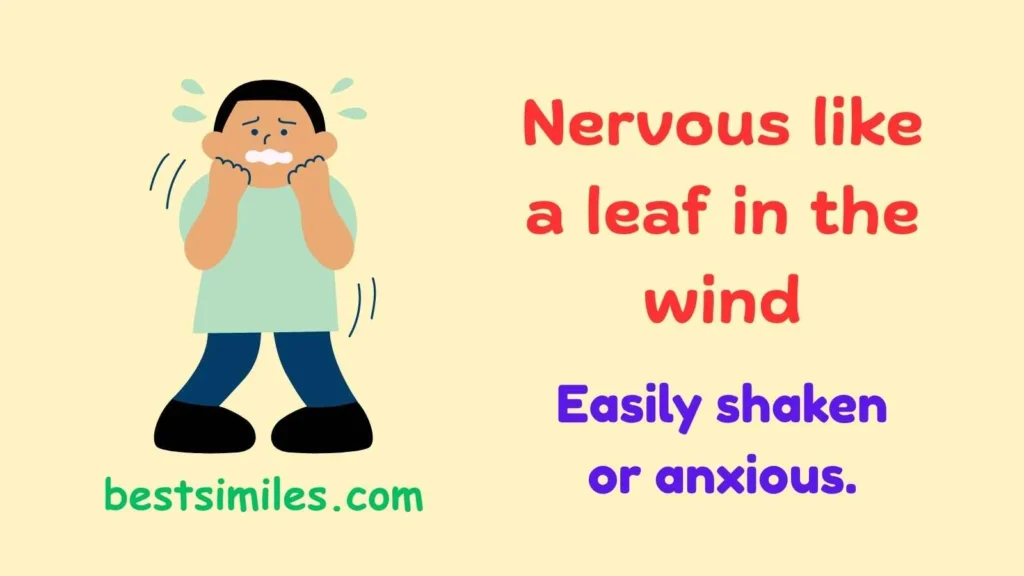
- Meaning: Easily shaken or anxious.
- Definition: Feeling unsure or vulnerable.
- Examples:
- She walked into the meeting, nervous like a leaf in the wind.
- His hands trembled, nervous like a leaf in the wind, before giving the speech.
Anxious like a mouse in a maze
- Meaning: Confused and stressed.
- Definition: Feeling trapped and uncertain.
- Examples:
- He searched for his keys, anxious like a mouse in a maze, not knowing where to look.
- She faced the complex instructions, anxious like a mouse in a maze.
On edge like a tightrope walker
- Meaning: Tense and alert.
- Definition: Feeling extremely cautious.
- Examples:
- She waited for the call, on edge like a tightrope walker, afraid of any mistake.
- He listened, on edge like a tightrope walker, as the argument escalated.
Restless like a caged bird
- Meaning: Unable to relax due to worry.
- Definition: Feeling trapped or uneasy.
- Examples:
- She tapped her fingers, restless like a caged bird, worrying about the delayed train.
- He paced the room, restless like a caged bird, anxious for news.
Stressed like a student before exams
- Meaning: Under pressure and anxious.
- Definition: Feeling burdened by upcoming challenges.
- Examples:
- He stayed up all night, stressed like a student before exams.
- She double-checked her presentation, stressed like a student before exams.
Tense like a drawn bowstring
- Meaning: Extremely tense and ready to snap.
- Definition: Feeling tight and anxious.
- Examples:
- He sat, tense like a drawn bowstring, waiting for the verdict.
- She held her breath, tense like a drawn bowstring, anticipating the result.
Shaky like jelly
- Meaning: Physically or mentally unsteady from worry.
- Definition: Feeling nervous or insecure.
- Examples:
- His hands were shaky like jelly before the interview.
- She spoke, shaky like jelly, afraid of making a mistake.
Afraid like a deer in headlights
- Meaning: Frozen by sudden fear or anxiety.
- Definition: Feeling paralyzed in a stressful moment.
- Examples:
- She froze, afraid like a deer in headlights, when the teacher asked her question.
- He stared at the unexpected problem, afraid like a deer in headlights.
Uneasy like a boat in stormy seas
- Meaning: Feeling unsettled or disturbed.
- Definition: Experiencing discomfort or anxiety.
- Examples:
- She felt uneasy like a boat in stormy seas before meeting her boss.
- His mind was uneasy like a boat in stormy seas, wondering what could go wrong.
Jumpy like a startled rabbit
- Meaning: Easily frightened or nervous.
- Definition: Overly sensitive to surroundings due to worry.
- Examples:
- He was jumpy like a startled rabbit, hearing every noise.
- She reacted, jumpy like a startled rabbit, to the sudden knock.
Twitchy like a cat’s tail
- Meaning: Restless or anxious.
- Definition: Showing subtle signs of tension.
- Examples:
- He tapped the desk, twitchy like a cat’s tail, worried about the delay.
- She kept glancing at her phone, twitchy like a cat’s tail.
On pins and needles
- Meaning: Extremely anxious or eager.
- Definition: Feeling tense or nervous waiting for something.
- Examples:
- She waited on pins and needles for the test results.
- He was on pins and needles before the big announcement.
Sweaty like a summer sun
- Meaning: Nervous to the point of physical discomfort.
- Definition: Feeling heat or sweat due to anxiety.
- Examples:
- His palms were sweaty like a summer sun during the speech.
- She felt sweaty like a summer sun, worrying about the performance.
Fidgety like a toddler
- Meaning: Unable to sit still due to worry.
- Definition: Showing nervous movements or restlessness.
- Examples:
- He was fidgety like a toddler, tapping his feet anxiously.
- She fiddled with her pen, fidgety like a toddler.
Like a ticking time bomb
- Meaning: Ready to explode with anxiety.
- Definition: Feeling extreme stress waiting for a trigger.
- Examples:
- He felt like a ticking time bomb before the exam.
- She was like a ticking time bomb, worried the secret might slip.
Nervous as a long-tailed cat in a room full of rocking chairs
- Meaning: Overly cautious and anxious.
- Definition: Feeling highly alert due to fear.
- Examples:
- He tiptoed, nervous as a long-tailed cat in a room full of rocking chairs.
- She checked every corner, nervous as a long-tailed cat in a room full of rocking chairs.
Restless as a stormy night
- Meaning: Mentally agitated or worried.
- Definition: Unable to find peace.
- Examples:
- His mind was restless as a stormy night thinking about the meeting.
- She tossed, restless as a stormy night, over the argument.
Shivering like a leaf
- Meaning: Nervous or scared.
- Definition: Experiencing physical trembling due to worry.
- Examples:
- He stood, shivering like a leaf, before the confrontation.
- She felt shivering like a leaf, anticipating bad news.
Quivering like a leaf in autumn
- Meaning: Trembling due to worry.
- Definition: Showing fear or anxiety physically.
- Examples:
- She was quivering like a leaf in autumn before the performance.
- He waited, quivering like a leaf in autumn, for the results.
Anxious as a cat before a storm
- Meaning: Sensing trouble and uneasy.
- Definition: Feeling premonition anxiety.
- Examples:
- He paced, anxious as a cat before a storm.
- She sensed danger, anxious as a cat before a storm.
Nervous like a deer at dusk
- Meaning: Alert and uneasy.
- Definition: Feeling cautious and wary.
- Examples:
- She moved quietly, nervous like a deer at dusk.
- He glanced around, nervous like a deer at dusk.
Edgy like a knife
- Meaning: Irritable or tense.
- Definition: On the verge of stress.
- Examples:
- He snapped, edgy like a knife, after a long day.
- She felt edgy like a knife, anxious about the meeting.
Frightened like a shadow in the dark
- Meaning: Easily scared.
- Definition: Feeling sudden fear or worry.
- Examples:
- She jumped, frightened like a shadow in the dark.
- He flinched, frightened like a shadow in the dark, hearing a noise.
Like a cat on hot bricks
- Meaning: Restless and anxious.
- Definition: Unable to stay calm due to worry.
- Examples:
- He sat, like a cat on hot bricks, awaiting the call.
- She walked nervously, like a cat on hot bricks.
Fretful as a mother hen
- Meaning: Overly concerned.
- Definition: Worrying excessively about someone or something.
- Examples:
- She was fretful as a mother hen over her child’s exam.
- He acted fretful as a mother hen, checking on everyone.
Wriggling like a worm
- Meaning: Uneasy and uncomfortable.
- Definition: Showing nervousness through movement.
- Examples:
- He was wriggling like a worm, trying to avoid attention.
- She felt wriggling like a worm under pressure.
Shaken like a leaf in a storm
- Meaning: Extremely nervous or scared.
- Definition: Physically trembling due to worry.
- Examples:
- She stood shaken like a leaf in a storm after the accident.
- He was shaken like a leaf in a storm, fearing the worst.
Nervous like a freshman on the first day
- Meaning: Anxious in a new situation.
- Definition: Feeling unprepared and uneasy.
- Examples:
- He entered the class, nervous like a freshman on the first day.
- She faced the crowd, nervous like a freshman on the first day.
Uneasy as a fox in the henhouse
- Meaning: Feeling danger around you.
- Definition: Suspicious and anxious.
- Examples:
- He looked uneasy as a fox in the henhouse during negotiations.
- She sensed trouble, uneasy as a fox in the henhouse.
How to Use These Similes in Creative Writing
- Poems: Add emotional depth by using similes to describe worry in short, vivid lines.
- Stories: Show character emotions naturally, creating relatability.
- Songs: Enhance lyrics with metaphorical expressions to convey tension or anxiety.
- Essays: Make descriptions more engaging by comparing abstract feelings to concrete images.
FAQs:
What is a simile?
A simile is a comparison using “like” or “as” to describe something vividly.
Why use similes for worried?
They make feelings of worry more relatable and expressive.
Can similes be used in formal writing?
Yes, when used sparingly to enhance clarity and imagery.
How many similes should I use in a story?
Use enough to enhance emotion but not overwhelm the reader.
Are similes different from metaphors?
Yes, similes use “like” or “as,” while metaphors state direct comparisons.
Conclusion:
In conclusion, similes for worried not only add color and emotion to your writing but also help readers truly feel the intensity of concern or anxiety.
Imagine a young artist, trembling before her first gallery showing, heart racing like a drum in a storm—this simple simile paints her worry vividly, making her experience relatable to everyone.
By using similes for worried, you can transform ordinary sentences into powerful expressions that captivate your audience.
Remember, the right simile can turn a fleeting thought into a lasting impression. Embrace these comparisons, practice them in your writing, and watch how effortlessly your words connect with readers while boosting your content’s SEO performance.

Jaison is the passionate wordsmith behind bestsimiles.com, dedicated to bringing creative and relatable similes to readers worldwide. With a deep love for language and expression, he crafts content that is both engaging and memorable. His goal is to inspire imagination and make every phrase resonate.